

EN English
English
French
Arabic
EN English
English
Français
Arabic
Docs

Shopium Documentation

Everything you need to set up, manage, and grow your store. Browse by topic using the sidebar or search below.

Docs Getting Started

Getting Started

Set up your Shopium store from scratch in under 30 minutes.

Welcome to Shopium! This guide walks you through creating your account, configuring your store, and launching your first product. Follow the steps below to get up and running quickly.

1. Create your account

  1. Go to shopium.tn/register and fill in your name, email, and password.
  2. Verify your email address via the confirmation link we send you.
  3. Log in to access your Dashboard for the first time.

2. Configure your store basics

  1. Navigate to Settings → General and set your Shop Name, Currency (default: TND), and Status.
  2. Set your default site language under the Translation section. You can also enable automatic product name translation.
  3. Optionally configure a Custom Domain by toggling Use Custom Domain and entering your domain — your store URL is previewed below.

3. Choose your template

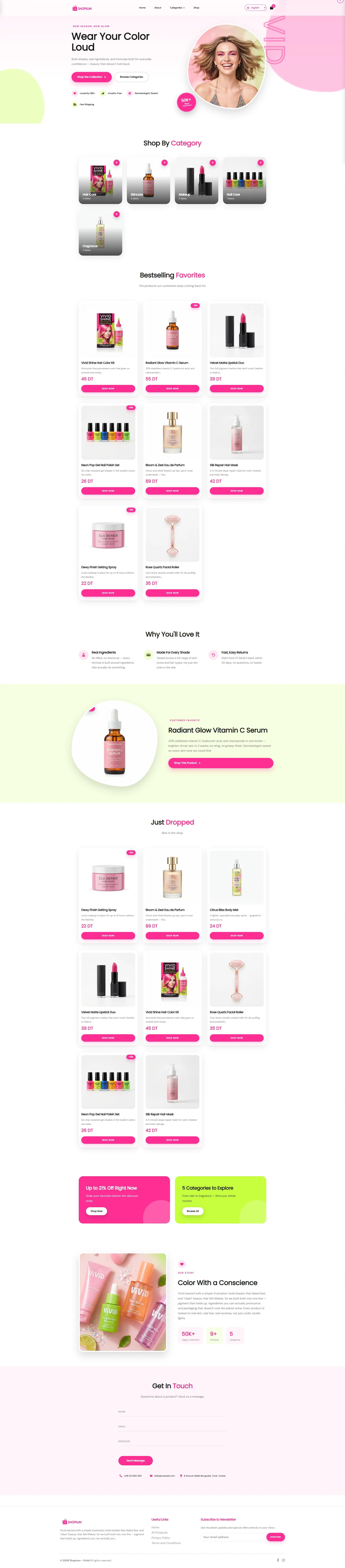
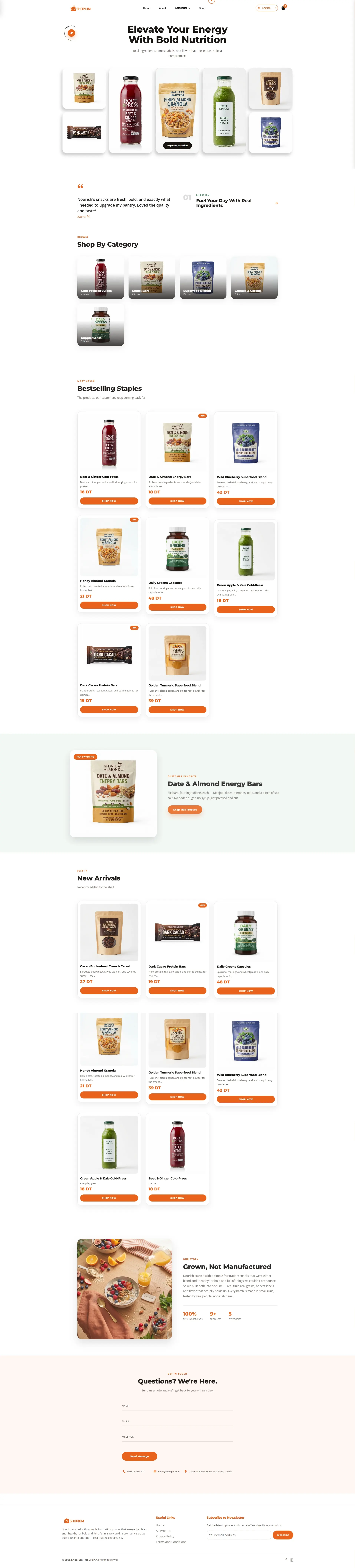
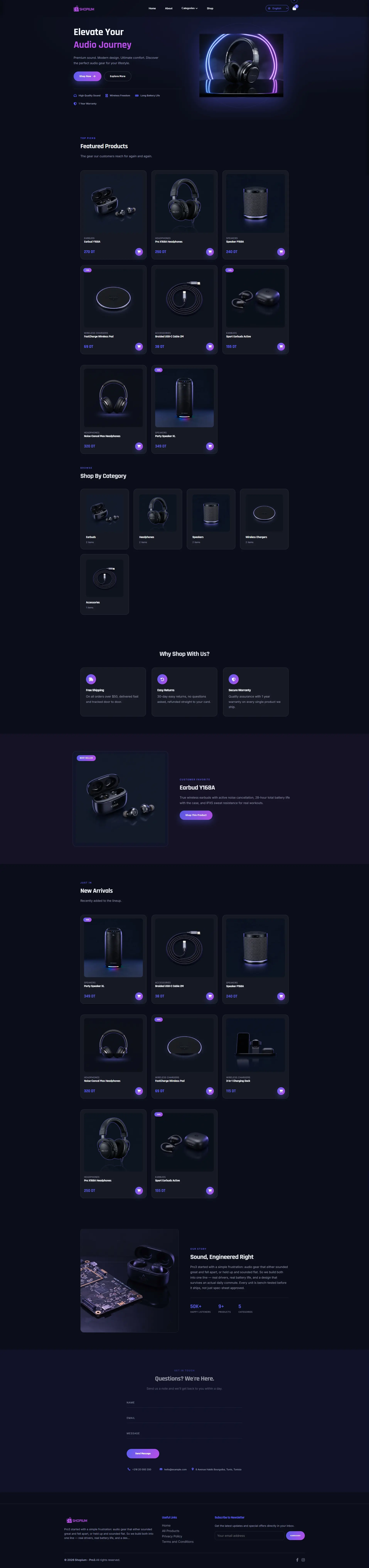
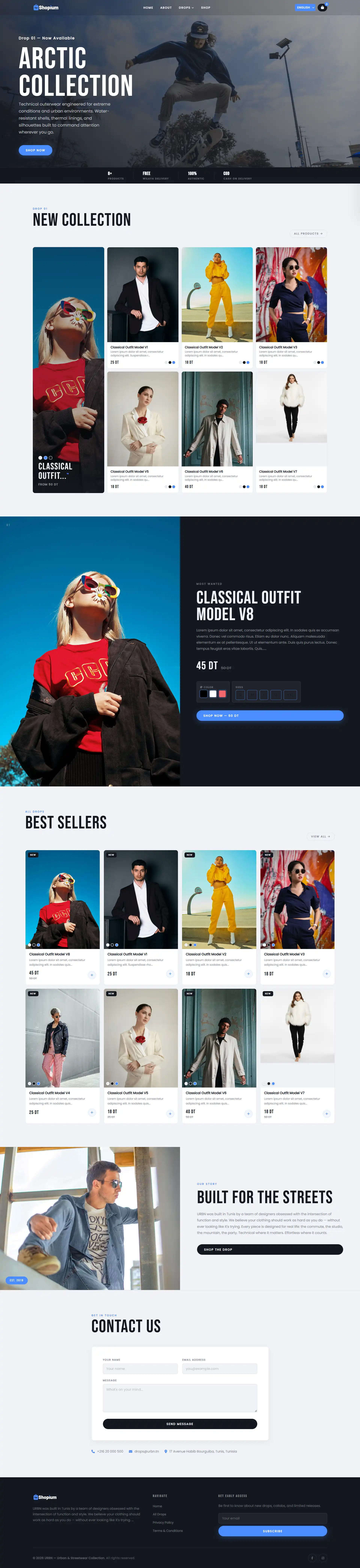
  1. Go to Templates in the sidebar to browse available store designs.
  2. Click any template thumbnail to preview it. Click Use this Theme to apply it.
  3. Customize colors, fonts, images, and text content using the left-hand editor panel.

4. Add your first product

  1. Go to Products and click Add Product +.
  2. Fill in the title, description (use Generate Description for AI assistance), category, price, and quantity.
  3. Upload up to 4 product images and set the product as Active.
  4. Click Add Product to publish.
Tip: Your store starts with a 7-day free trial — no credit card required. You have full access to all features during the trial period.
Docs Products & Properties

Products & Properties

Add, edit, and organise your catalogue with variants like size, color, and storage.

Adding a product

Go to Products and click Add Product +. The modal form contains the following fields:

Title

The product name displayed on your storefront.

Description

Write manually or click Generate Description for AI-powered copy.

Category

Assign a category from your existing list (create them under Categories first).

Price & Discount

Set the selling price and an optional discount value displayed on the product card.

Images

Upload up to 4 images (max 4 MB each). The first image is used as the thumbnail.

Active / Featured

Toggle Active to show the product. Toggle Featured to highlight it on your homepage.

Properties (variants)

Properties let you define product variants such as storage capacity, color, or size. Go to Properties and click Add a Property +.

  1. Choose a Property name (e.g. "Storage") and a Type — either Text for labels like "50go / 500go" or Color for color swatches.
  2. Add your values (e.g. 50go, 150go, 250go, 500go for a Storage property).
  3. Save. The property now appears when adding or editing a product under + Add Property.
Color properties render as circular swatches on the product page. Text properties render as selectable pills.

Editing & deleting products

From the Products grid, each card shows an Edit Product and Delete button. You can also search by name, category, or keyword using the search bar at the top, and sort by Best Seller, Price, or Newest.

Docs Categories & Orders

Categories & Orders

Organise your products into categories and manage incoming customer orders.

Managing categories

Categories help customers browse your store. Navigate to Categories to view, add, edit, or delete them.

  1. Click Add Category + and enter a category name (e.g. Phones, Computers, Watches).
  2. Use the Edit button to rename an existing category at any time.
  3. Click Delete to remove a category. Products in a deleted category will become uncategorised.
Important: Create your categories before adding products so you can assign them during the product creation flow.

Order management

Go to Orders to see all customer orders in a detailed table including customer name, email, phone, delivery address, note, date, total, and order status.

Each order has three status stages you can progress through:

Waiting

The order has been placed by the customer and is awaiting your action.

Processing

You have confirmed the order and it is being prepared for shipment.

Done

The order has been delivered and completed successfully.

Reports

View order statistics and download CSV exports from the Reports section.

Click the status buttons in the Orders table row to move an order through each stage. The active status is highlighted in colour (orange for Processing, green for Done).

Docs Customers & Messages

Customers & Messages

View your customer base and communicate directly through the built-in messaging inbox.

Customers

The Customers page gives you a directory of all customers who have placed at least one order. Each row shows:

Name & Contact

Full name, registered email address, and phone number.

Address

Delivery address provided by the customer during checkout.

Total Ordered

The cumulative value (in DT) of all orders placed by this customer.

Order History

See individual order dates, amounts, and statuses in the Orders section filtered by customer.

Messages inbox

The Messages page is a built-in customer communication tool. Customers can send you messages from your store's contact widget, and you can reply directly from the dashboard.

  1. Click any conversation thread in the left panel to open it.
  2. The active conversation is highlighted in blue. The right panel shows the message thread with timestamps.
  3. Type your reply and press Enter or click Send to respond.
Each conversation is identified by the customer's name, email, and timestamp of the last message.
Docs Newsletter

Newsletter

Manage your subscriber list and configure automated email campaigns.

Subscriber list

The Newsletter page displays all customers who opted in to receive email updates from your store. Each row shows the subscriber's email address.

Click Send Email to compose and send a manual campaign to all subscribers instantly.

Automation (Settings → Communication)

Shopium can automatically send emails to your subscriber database based on store events. Configure this under Settings → Communication. The available automation toggles are:

New Product Emails

Notifies subscribers when you publish a new product to your store.

Promotion Emails

Sends a promotional campaign email weekly to your full subscriber list.

Order Confirmation

Sends an automated order receipt email to the customer immediately after checkout.

Top Seller

Automatically highlights your best-selling product in a weekly email digest.

Automated emails (except Order Confirmation) are sent weekly. Order Confirmation emails fire in real-time on every completed checkout.
Docs Reports & Analytics

Reports & Analytics

Track sales performance, order trends, and product analytics across four report types.

Navigate to Reports in the sidebar. Use the top-left sub-menu to switch between report types and the time period dropdown (All time, This month, etc.) to filter data.

Sales reports

Shows total revenue, best sales month, top daily sale, and most sold product. An interactive line chart visualises daily sales volume over the selected period. Below the chart, a date-by-date table lists each sale with the number of transactions, total amount (DT), and product names. Click Download CSV to export the full dataset.

Orders reports

Displays four KPI cards — Waiting Orders, Processing Orders, Finished Orders, and Orders This Month — alongside a bar chart showing order count by date. Useful for spotting fulfilment bottlenecks.

Products reports

A breakdown of how each product is performing in terms of units sold and revenue contribution. Helps you identify top performers and underperforming items to adjust your catalogue.

Delivery reports

Tracks delivery-specific metrics including shipment counts by status and geographic distribution of orders, helping you evaluate your logistics operation.

Dashboard home analytics

The Home page also shows a quick overview: Total Sales, Waiting Orders, Top Product, and Delivered Orders for the selected period, plus a sales bar chart, top products list, a products analytics donut chart, and a recent orders table.

All report tables support CSV export via the green Download button below the chart.
Docs Templates & Customization

Templates & Customization

Choose from a library of premium themes and fully customize your store's look without any code.

Choosing a template

  1. Go to Templates in the sidebar.
  2. Browse the template grid on the left. Click any thumbnail to preview it live on the right-hand canvas.
  3. Use the device toggle (desktop / tablet / mobile) in the top-right to preview responsiveness.
  4. Click Use this Theme to apply the template to your live store.

Customizing your template

The left-hand editor panel offers several collapsible sections:

General

Store name, logo, favicon, and global layout options.

Theme Colors

Set your primary, secondary, and accent brand colors across the entire store.

Fonts

Pick your main and secondary fonts from a curated selection (e.g. Montserrat, Poppins).

Text Content

Edit hero title, subtitle, hero paragraph, about title & text — all in one place.

Template Images

Upload a custom hero image and about section image to replace the template defaults.

Contact

Set your store's public contact email, phone, and social media links shown in the footer.

Saving changes

Click the green Save button at the top-left of the Templates page to apply all your customisations. Changes take effect on your live store immediately. Use Preview to review before saving.

You can switch templates at any time. Your products, orders, and settings are never affected by a theme change.
Docs Services

Services

Connect third-party tools like Google Analytics, Facebook Pixel, and WhatsApp to your store.

Go to Services in the sidebar to view all available integrations. Each service card shows its current status (grey dot = inactive, green dot = active) and an Activate / Deactivate button.

Google Analytics

  1. Click the settings gear icon on the Google Analytics card.
  2. Enter your GA Measurement ID (format: G-XXXXXXXXXX).
  3. Click Activate. The tracking code is automatically injected across all store pages.

Facebook Pixel

  1. Click the settings gear on the Facebook Pixel card.
  2. Paste your Pixel ID from Meta Events Manager.
  3. Click Activate to begin tracking conversions and page events.
When Facebook Pixel is active, your store will set marketing cookies on visitors' browsers. Make sure your cookie consent banner is configured accordingly.

WhatsApp Quick Call

  1. Click the settings gear on the WhatsApp card.
  2. Enter your WhatsApp phone number (including country code, e.g. +216XXXXXXXX).
  3. Click Activate. A floating WhatsApp button will appear on your storefront for customers to contact you instantly.
Docs Settings

Settings

Configure your store's general options, shipping rules, and automated communications.

General settings

Located at Settings → General. Key options:

Shop Name

The public name displayed on your storefront header and browser tab.

Currency

Set your store's default currency (e.g. TND, USD, EUR).

Status

Toggle between Active (store is live and visible) and Inactive (maintenance mode).

Translation

Set the default site language and enable automatic product name translation.

Domain

Use a custom domain or your default Shopium subdomain (yourplatform.com/slug).

Store Slug

Your store's URL path (e.g. printables → yourplatform.com/printables).

Shipment settings

At Settings → Shipment you can configure:

  1. Payment Method: Toggle Cash On Delivery on or off for your store's checkout.
  2. Country & Cost: Set your delivery country (e.g. Tunisia) and the flat shipment cost in DT.
  3. Allow Open Package: Enable customers to open and inspect the package before paying. Set the expected delivery window (e.g. 2–3 days).

Communication settings

At Settings → Communication you can preview automated email templates (Promotion, New Product, Order Confirmation, Top Sellers) and toggle newsletter automation. See the section for full details.

Click the green Save button (top-right of the Settings page) after making any changes.

Docs Subscription & Plans

Subscription & Plans

View your current plan, manage billing, and upgrade to unlock more features.

Viewing your current plan

Go to Settings → Subscription. Your active plan card shows the plan name, price, billing cycle, included features, and the subscription end date.

Available plans

Feature Gold 78 DT / 6 months Diamond 128 DT / Year
Full dashboard access
Fully customisable template
Automatic email marketing
Domain integration
Dedicated support
Free automatic updates
Best value (per month)~13.2 DT/mo~10.8 DT/mo

Upgrading your plan

  1. Go to Settings → Subscription and click Upgrade Your Plan.
  2. The plan selection modal appears showing Gold and Diamond side by side.
  3. Click Pay Now on your chosen plan. Accepted payment methods: Visa, Mastercard, and Edinar.
  4. Your new plan activates immediately and the subscription end date updates in your dashboard.
All subscription payments are final and non-refundable. See our Terms of Service for full details.

Cancelling your subscription

You can cancel at any time from Settings → Billing → Cancel Plan. Your store remains active until the current billing period ends. After cancellation you will revert to a free read-only mode.

No documentation found for "". Try a different keyword.